Visual Arts
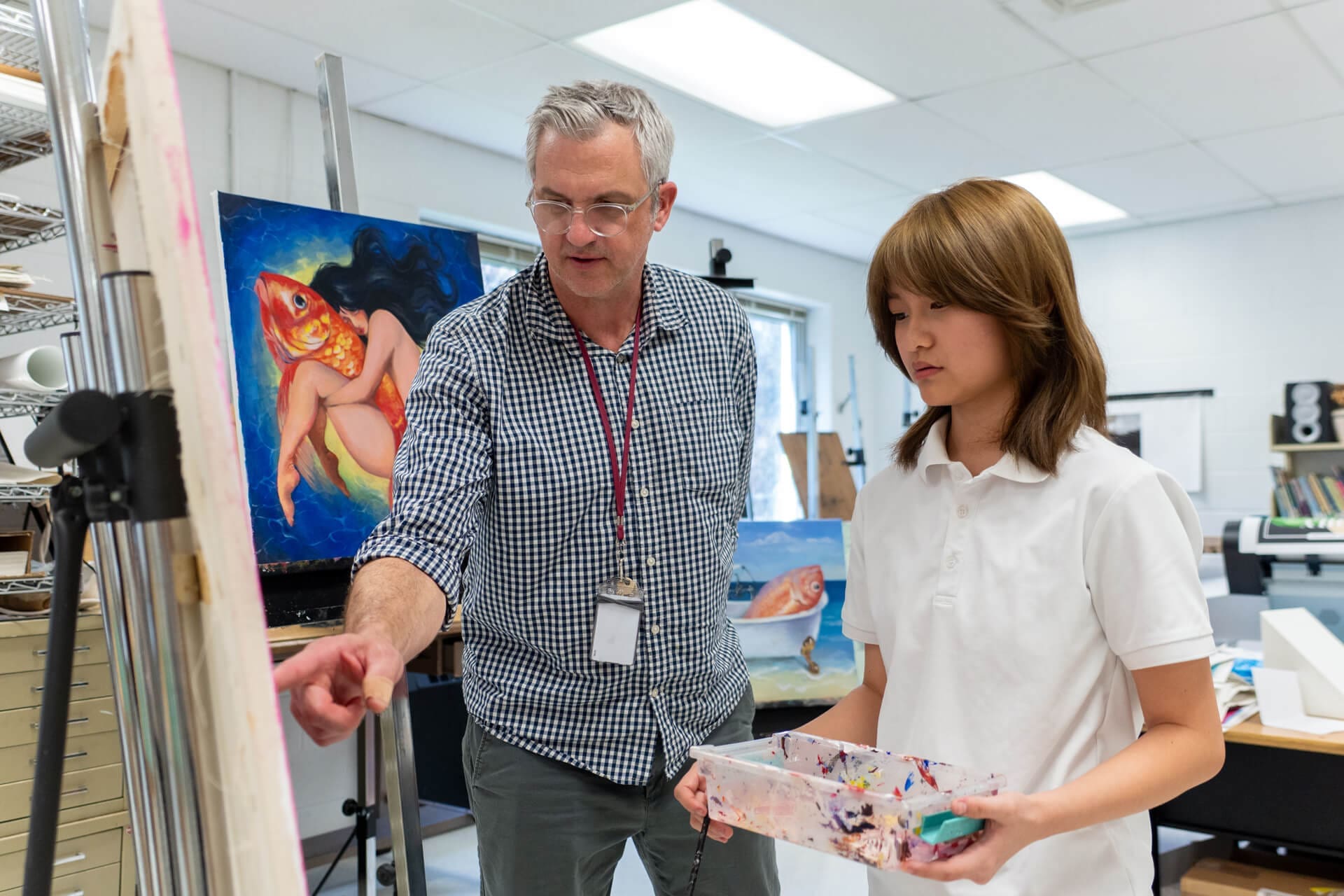
The visual arts curriculum at St. Anne’s-Belfield School encourages active exploration of a variety of mediums. Students are given the opportunity to expand on their own creative endeavors through ceramics, drawing, painting, digital art and photography.
Visual Art in the Lower School
The study of art history and historic artists is introduced in lessons throughout K – Grade 4 as an important part of the art education process. Other areas considered are, of course, primarily art production and creation, and to a lesser extent, art criticism and aesthetics. The Elements and Principles of Design and the Eight Studio Habits of Mind are emphasized in the visual arts classroom. Kindergarten – Grade 4 students are taught by an art specialist who introduces the language of art and helps students develop skills in seeing, exploring, interpreting, and expressing their world through a variety of two- and three-dimensional media.
Kindergarten
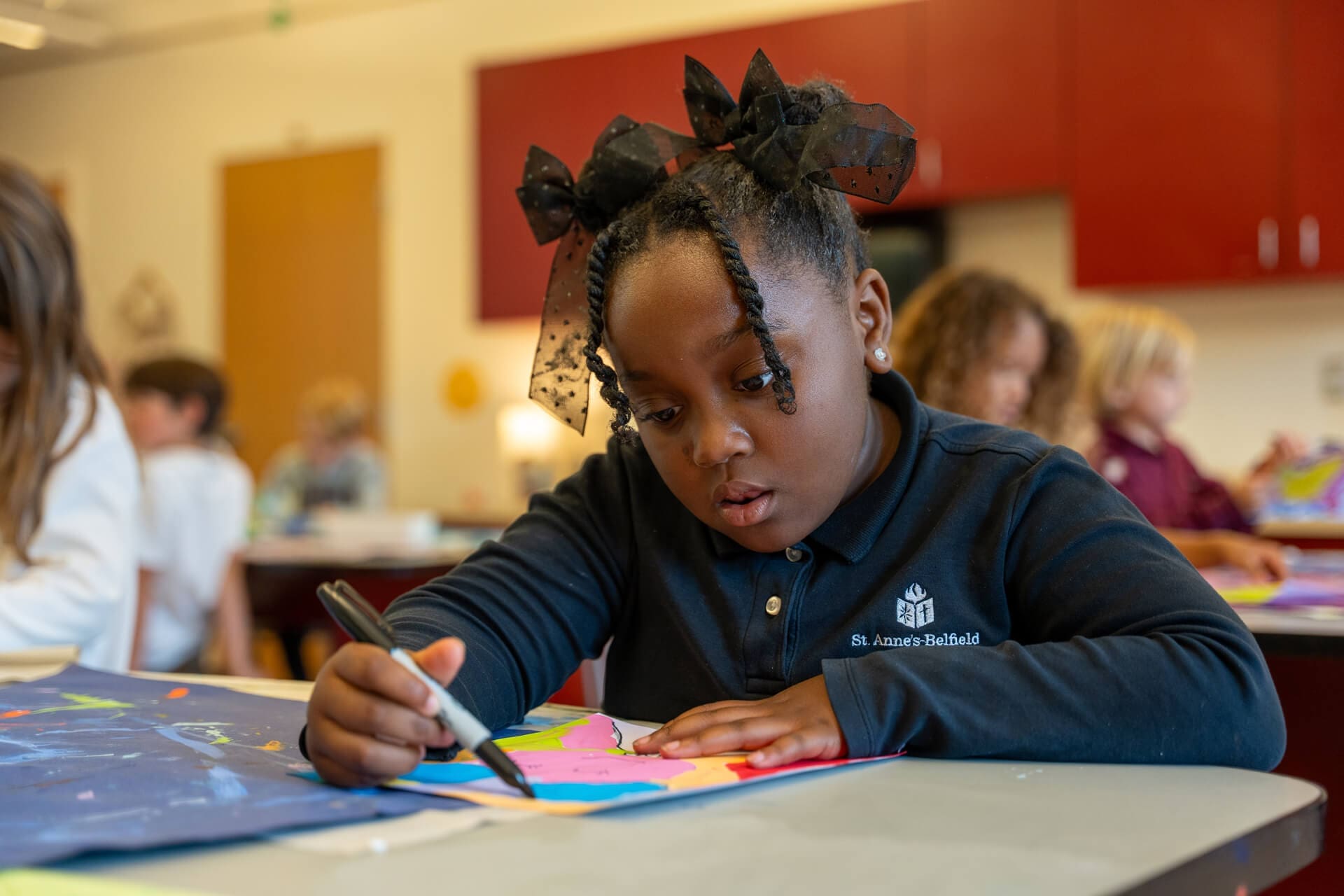
Kindergarten students explore the visual arts through experimentation with materials, drawing, painting, sculpting, and imagining. Students are learning basic artmaking with a variety of media with an emphasis on engaging the senses while being exposed to different cultures, artists, and genres of art. Through art-making, students practice basic fine motor skills of cutting, gluing, painting with hands and brushes, and sculpting. Identifying building blocks of design, caring for materials, cooperating, and sharing ideas while growing their imagination are emphasized in this class. Students also learn to share their artistic discoveries and respect and appreciate the efforts of others.
Grade 1
Grade 1 students continue to explore the visual arts through developmentally appropriate experimentation with materials, drawing, painting, sculpting, and imagining. Students are learning basic artmaking with a variety of media while being exposed to different cultures, artists, and genres of art which are integrated into studies in other disciplines. Through artmaking students practice more challenging fine motor skills of cutting, gluing, painting with brushes, and sculpting. Identifying and using the vocabulary of the building blocks of design, caring for materials, cooperating, and sharing ideas while growing their imagination are emphasized in this class. Students continue to share their artistic discoveries and learn how to respect and appreciate the efforts of others.
Grade 2
Grade 2 students continue to explore the visual arts through developmentally appropriate experimentation with materials, drawing, painting, sculpting, and imagining. While using a variety of media, students are exposed to different cultures, artists, and genres of art, which are integrated into studies in other disciplines. Through artmaking, students practice more precise fine motor skills of cutting, gluing, painting with multiple types of brushes, and sculpting. Identifying and using the vocabulary of the elements and the principles of design, caring for materials, cooperating, and sharing ideas while growing their imagination are emphasized in this class.
Grade 3
Grade 3 students continue to explore the visual arts through developmentally appropriate experimentation with materials, drawing, painting, sculpting, and imagining. While using a variety of media, students are exposed to different cultures, artists, and genres of art, which are integrated into studies in other disciplines. Through artmaking, students practice more intricate and precise fine motor skills of cutting, gluing, painting with multiple types of brushes, and sculpting. Identifying and using the vocabulary of the elements and the principles of design, caring for materials, cooperating, and sharing ideas while growing their imagination are emphasized in this class.
Grade 4
Grade 4 art continues to focus on honing skills of observation, drawing, painting, and sculpture while bringing students’ own voice to their work. These young artists create works reflecting their studies of the rich and varied art of ancient China. Students will recognize style, nature, imagination, experimentation, and the world around them as ripe sources for inspiration in art.
Visual literacy and discussions about aesthetics are integrated in each lesson. Students are encouraged to look at art and cultural history with greater understanding and to discuss and share perceptions and reflections.
Visual Art in the Middle School
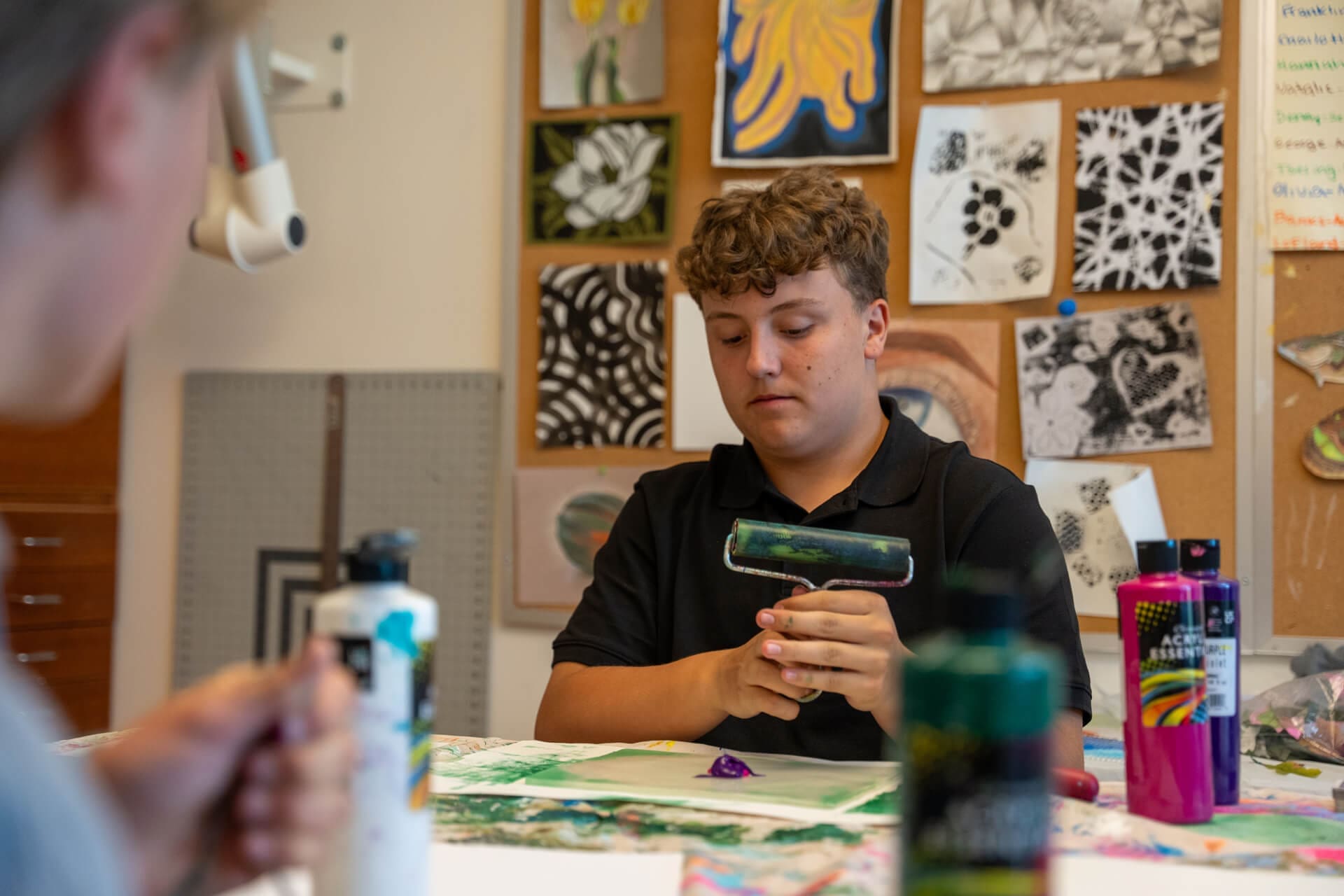
Grades 5 and 6 arts classes offer students broad exposure and exploration within a wide range of arts. All students in Grades 5 take strings, visual arts, music & movement, and theatre. In Grade 6, students choose a focus in either orchestra or choir and also enroll in both visual arts and theatre. The arts program in the Grades 7 and 8 provides an opportunity for students to focus on one area of the arts more exclusively. Students may choose to excel in the string orchestra, choir, theater arts, or specific visual arts media.
Grade 5
Grade 5 students explore drawing, painting, and sculpture using a wide variety of materials, ideas, and techniques. They work with realistic, abstract, and non-objective images with an emphasis on developing creativity, imagination, and skills. During art class, references to specific artists, art works, styles, and movements are incorporated into this course. In our study of the work of Claude Monet, students study theories of light and color applied to painting, as Monet did. They learn to base their paintings on groups of values and tones signifying time of day. Students create sculptures of masks based on African inspirations and studies in history. They also create non-objective abstract sculptures based on the works of Frank Stella.
Grade 6
In Grade 6, students continue to build on the skills and knowledge acquired in Grade 6 and use the elements and principles of design to develop their own sensibilities and meaning in their work. Through drawing, painting, sculpting with clay, computer graphics, and a variety of media, students in sixth grade study the arts with an emphasis on integration with their history unit on the Renaissance, particularly in studying perspective. Students learn to use clay in many of its more expressive forms, using glazes and other decoration. Grade 6 students also continue to build on their knowledge of color theory, especially applied to realistic painting.
Grade 7 & 8
Grade 7 & 8 Studio Arts
This year-long visual arts class includes 2D, 3D, and digital arts. Students develop and explore foundational techniques and skills using the structure of the elements and principles of design through a wide variety of media. Once foundational skills are attained, students will be challenged to explore their own ideas while using more advanced techniques and processes. Students will be exposed to diverse art genres and the works of historic and contemporary artists. This class will be taught collaboratively by a team of trained artists and teachers.
Student work will be guided by and evaluated using the Elements and Principles of Design and the eight “Studio Habits of Mind,” developing craftsmanship, engaging and persisting, envisioning, expressing, observing, stretching/experimenting, reflecting, and understanding art as well as the arts community. Students will also be setting goals for themselves based on frequent self-reflective evaluations of their own artwork and work habits.
Visual Art in the Upper School
Students in Grades 9 – 12 have the ability explore a broad range of visual arts mediums. From architectural drawing, throwing on the pottery wheel, to learning Adobe InDesign and Illustrator students can choose to one or all of these classes over their 4 years in the Upper School.
Drawing & Painting
Drawing 1
This introductory course will encourage students to cultivate awareness of their visual surroundings. By practicing observational drawing, students will learn how to convey light source, depth and flatness, and perspectival space. In addition to drawing from life, students will practice constructing invented spaces. Through a series of conceptual illustration prompts, students will practice arranging elements within a composition and using design decisions to convey meaning. We will work in media such as charcoal, graphite, and pen and ink. Students will develop proficiency in the vocabulary of art and design through small group critiques and class discussions in response to slide presentations of historical and contemporary artwork.
Drawing 2: Architecture
Students will study the subject of buildings, and render interiors and exteriors. Projects will include 1-Point Perspective, 2-Point Perspective, on-site free-hand gesture drawings, and other dynamic man-made environments.
Drawing 2: The Figure
Students will study the human form, and draw the figure from life. They will consider subject posture and position as it relates to composition for work in the medium.
Drawing 2: Still Life
Students will study masterworks of still life subject matter and reimagine those principles as they apply to present day objects.
Painting 1
During this introductory painting course, students will at first experience a variety of media while acquiring a basic understanding of design and composition. We will then turn our attention to color and painting. Our focus will be on color theory, color mixing, value in color, composition, and foundational painting skills. As we move from skill building to painting as a creative process and means of communication, students will explore their own unique ideas, thus developing their individual artistic voices.
Painting 2: Collage
Students will engage with foundational painting ideas from the Painting Foundations course, in addition to using material from other sources (found objects, clippings, discarded items, etc.) to produce imagery that is a collection of visuals put together into a coherent whole.
Painting 2: Nature
Students will learn how to paint natural landscapes and natural objects. Projects will include painting natural elements and objects, a landscape painting, and plein air painting with a focus on layering paints and varying brush strokes to achieve depth and texture.
Painting 2: Objects
Students will study masterworks of still life subject matter and reimagine those principles as they apply to present day objects.
Advanced Drawing & Painting Portfolio
In this course, open-ended and elegant questions are posed to students. They will use the concepts and techniques learned in the previous courses to pursue rigorous, unique, and engaging ends. With greater agency and ownership of the creative process (from inception and design, to criticism and evaluation, to documentation and resolution), the students are challenged to embody what it means to be an artist. Experimentation (or “serious play”) and failure are part of the learning; adjusting, re-considering, and revising are part of the artist experience.
Ceramics
Ceramics 1
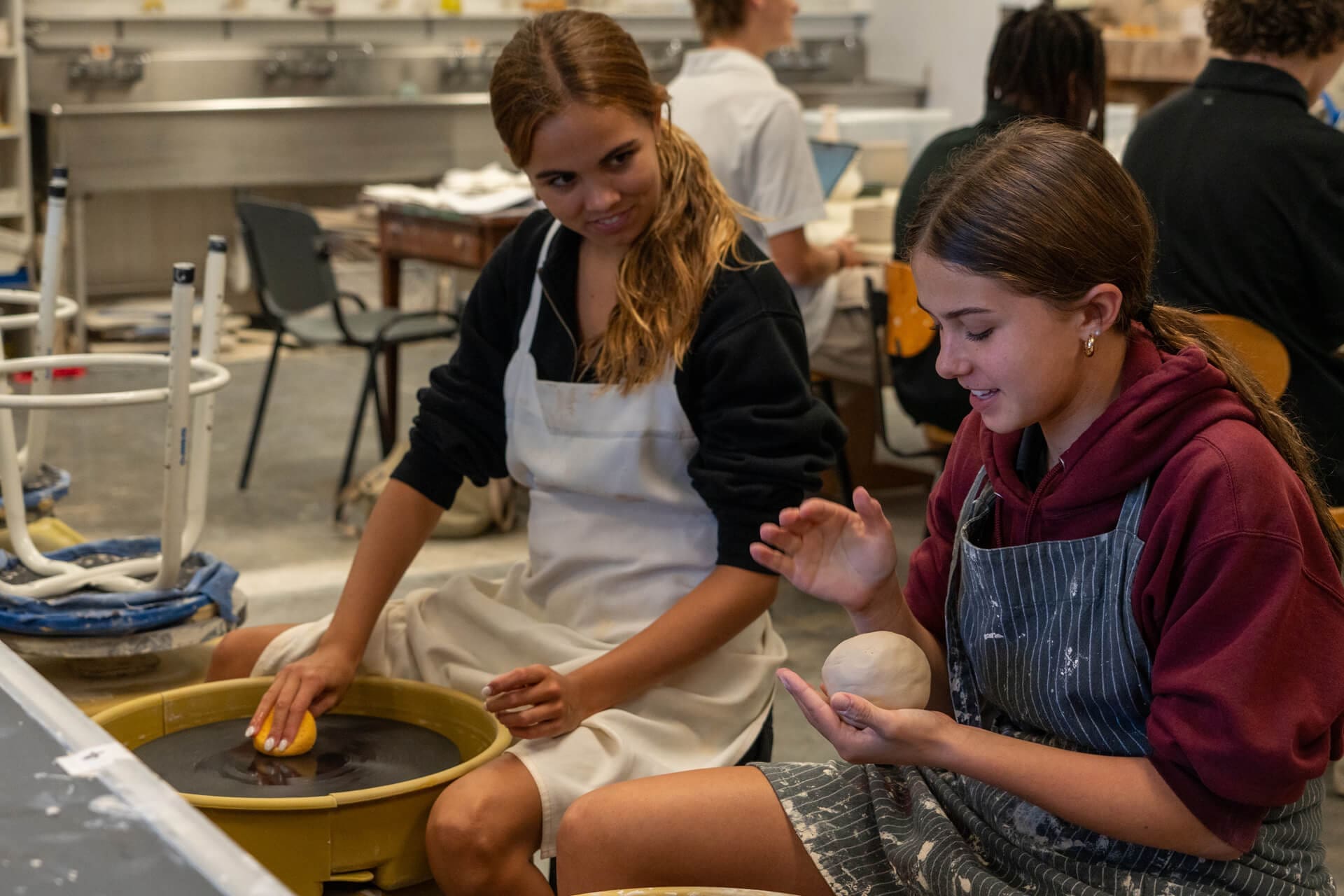
This course introduces students to ceramics. Students will learn various hand-building methods and will begin throwing on the wheel. Students will study ceramic artworks and learn the fundamentals of three-dimensional design as they begin to consider the relationship between form and function. Students will learn various approaches to surface design that add line, texture, pattern, and color as they apply underglaze and glaze to their clay forms. Students will keep a sketchbook of their projects and ideas, write responses to various class topics and project critiques, and engage in class discussions about ceramic artworks.
Ceramics 2: Functional Pottery
Students will further develop their wheel throwing skills. Projects will include functional pieces (bowls, mugs, plates, pitchers, and bottles) with a focus on combining form with function. Students will be encouraged to explore surface design with texture and color.
Ceramics 2: Sculptural
Students will further develop their sculptural skills. Students will learn techniques for building structurally sound sculptures using armatures. They will use additive and subtractive techniques for sculpting both representational and abstract sculptures.
Advanced Ceramics Portfolio
Students will continue to advance their wheel throwing, handbuilding, and sculpting skills by learning more advanced techniques. Students will work with greater agency and ownership of their creative process (from inception and design, to criticism and evaluation, to documentation and resolution). They will work towards developing their own body of work as they learn new approaches to working with clay in conjunction with their study of ceramic artworks and master potters.
Digital Media & Photography
Digital Media Arts 1
Students will learn basic techniques in photography and principles of design. They will explore a practical understanding of the Camera Obscura and its associated photographic equipment, both analog and digital. Additionally, students will develop skills in design software programs, with introductions related to typography, color, composition, shapes, and imagery.
Digital Media Arts 2: Identity Design
Digital Media: Identity Design blends creativity and technical skills in graphic design, logo creation, and brand development. Students will explore the depths of Adobe Illustrator, a leading vector graphic software, gaining fluency in its tools and features to bring unique design ideas to life. The class will touch on the use of color and typography in design and how to use them to communicate mood, tone, and meaning effectively. The final project will delve into logo design, where students will learn how to design symbols that are visually appealing and encapsulate the essence of a brand. By the end of the course, students will be able to create visually meaningful vector designs.
Digital Media Arts 2: Photojournalism
Students will learn how to use photography as a tool for storytelling and documentation in a community. Students will have the opportunity to work in a variety of community settings to document the stories of the places that we inhabit.
Digital Media Arts 2: Studio Techniques
This course focuses on the art and technical skills of photographing in a controlled studio environment. Students develop and refine their camera skills by practicing key concepts such as the exposure triangle (aperture, shutter speed, and ISO) and applying composition rules to create compelling images. Throughout the course, students work with both natural and artificial lighting setups, including flash bulbs, soft boxes, reflectors, and spots, learning how to manipulate light to achieve different moods and effects. Students explore using color theory in lighting setups, both complementary and contrasting color schemes, and subject choices to create visual interest and impact. From shooting close-up images of flowers to staging professional-style portrait sessions for a simulated magazine photo shoot, students are challenged to think critically and creatively. In addition to photography, students also practice basic layout design, learning how to integrate their studio imagery into polished compositions that could appear in magazines, posters, or promotional material.
Advanced Digital Media Arts Portfolio
In this course, open-ended and elegant questions are posed to students. They will use the concepts and techniques learned in the previous courses to pursue rigorous, unique, and engaging ends. With greater agency and ownership of the creative process (from inception and design, to criticism and evaluation, to documentation and resolution), the students are challenged to embody what it means to be an artist. Experimentation (or “serious play”) and failure are part of the learning; adjusting, re-considering, and revising are part of the artist experience.