Music
The music curriculum at St. Anne’s-Belfield School welcomes all students and encourages active and spirited engagement. Students are given frequent opportunities to explore and expand their own creative and musical talents in the classroom, and through performances at all grade levels.
Music & Theatre in the Lower School
Our Music & Movement program is based on the Orff-Schulwerk approach to music education. This approach is characterized by the inclusion of all students in ensemble work; the unity of music, movement, and speech; the emphasis on process teaching; and the prominence of the student’s voice as the centerpiece of all lessons.
Kindergarten
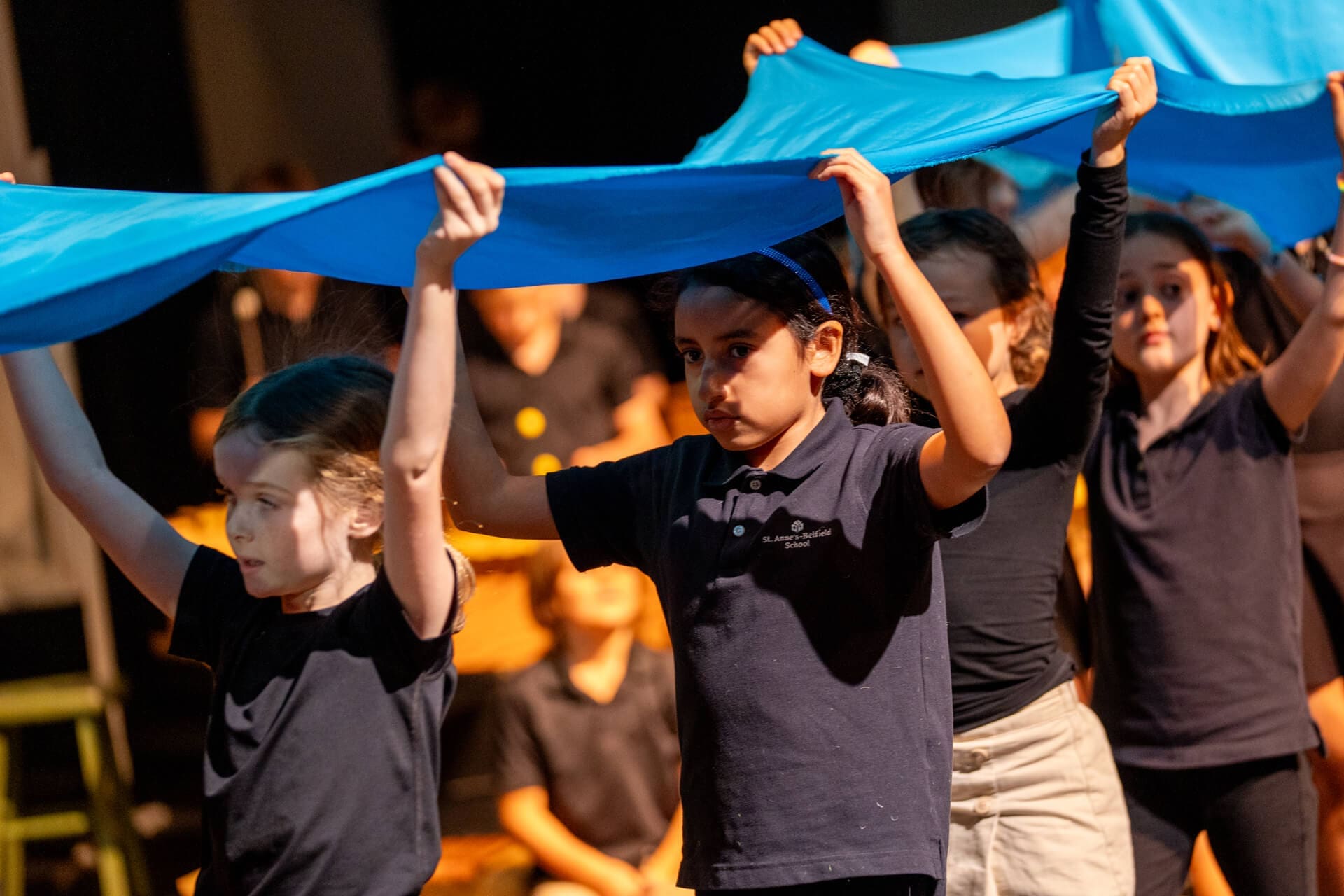
Kindergarten students are engaged in movement activities for a majority of class time, both creative movement and folk dances/singing games. Stories, poems, songs, and works of art are used as the basis for creating music, dances, and dramatizations.
Grade 1
Students are engaged in movement activities for a majority of class time, both creative movement and folk dances/ singing games. Stories, poems, songs, and works of art are used as the basis for creating music, dances, and dramatizations. Partner work becomes increasingly more complex throughout the Grade 1 year.
Grade 2
In Grade 2, students are often engaged in small group work in order to strengthen their collaboration skills. Emphasis is placed on creating small musical and dance compositions and dramatizations based on stories, poems, songs, and works of art, which become more complex as the year progresses. Creative dance, rhythm reading, and simple instrumental ensemble pieces with more than one part are skills that are cultivated in Grade 2 Music & Movement.
Grade 3
Grade 3 students continue to work on collaborating in small groups to create music, movement, and dramatizations from stories, songs, poetry, and works of art. Ensemble work features multiple parts happening at the same time, and canon singing is a new skill that is introduced. The tasks assigned to third graders ask them to be increasingly more independent and to take responsibility for creating more complex pieces to share. Technology is used at times to allow students to compose music independently, and students also use digital platforms to create short films.
Grade 4
Grade 4 students continue to work on collaborating in groups to create music, movement, and dramatizations from stories, songs, poetry, and works of art. The recorder is a new instrument that is introduced in the Grade 4 year, allowing students to begin reading music in a very basic way, and to learn the basics of independent practice. Technology is used at times to allow students to compose music independently, and students also use digital platforms to create short films.
Music in the Middle School
All students in Grades 5 take strings and, music & movement. In Grade 6, students choose a focus in either orchestra or choir. The arts program in the Grades 7 and 8 provides an opportunity for students to focus on one area of the arts more exclusively. Students may choose to excel in the string orchestra, choir, theater arts, or specific visual arts media.
Music & Movement
Grade 5 Music & Movement
The Grade 5 Music & Movement program is based on the Orff-Schulwerk approach to music education, and emphasizes advanced ensemble opportunities. This method is characterized by the inclusion of all students in ensemble work; the unity of music, dance, and speech; the emphasis on process teaching; and the guided improvisation and composition experience. Each week the students receive technique lessons in singing, barred instruments, recorder, or dance. Students are also given opportunities to explore literature, songs, movement, instruments, or even visual art as inspiration for their own music and dance making possibilities.
Music literacy is taught through actively making music with the body, followed by identifying patterns in sound, and finally by labeling that sound with symbols. In fifth grade, students will address modal literature, advanced instrument technique, layered melodies leading to advanced harmony study–through the voice and instruments, and physical movement work appropriate for adolescent bodies. Students at this level perform actively through opportunities in chapel and various Middle School performances throughout the year.
Orchestra
Grade 5 Strings
Beginning performance and music reading skills are introduced and refined as students study traditional classical, folk, and improvisational repertoire on the violin, viola, cello, or bass. The course is based on the pedagogy of Dr. George Bornoff and provides a logical, sequential, and unique approach to the mastery of instruments in a classroom setting. First year students are introduced to several bowing styles and finger patterns with many variations to ensure flexibility and understanding. Home practice is required.
Grade 6 Orchestra
The Grade 6 Orchestra students continue to refine individual technical skills and learn new collaborative skills for ensemble music. No previous strings experience is required, but new students benefit from prior experience in music and may need additional support if new to a stringed instrument. New students/families should engage with the orchestra teacher prior to enrollment. The Grade 6 Orchestra meets two times each week and performs in Chapel.
Grade 7 & 8 Orchestra
The Mozart Orchestra is the Grades 7 & 8 orchestra open to any student who has played a string instrument for at least one school year. Students study beginning- through intermediate-level repertoire including solo, ensemble, and chamber music in classes that meet three times per week. The Mozart Orchestra performs two school concerts and occasional Chapel services, including Lessons and Carols.
Choir
Grade 6 Choir
The Grade 6 year represents an important transition from ensemble work in a general music program to specialization in advanced singing in preparation for the Grades 7 & 8 chorus. Students will still have exposure to Orff media — instruments, body work, and speech — in order to fine tune their musicianship skills. The focus, however, will become introducing students to choral concepts such as: vocal warm-ups, breath control, beginning score analysis, two-part sight-singing, and diction. In addition, students will receive lessons in embodied vocal technique appropriate for the young voice. Students at this level perform actively through opportunities in Chapel and various Middle School performances throughout the year.
Grades 7 & 8 Choir
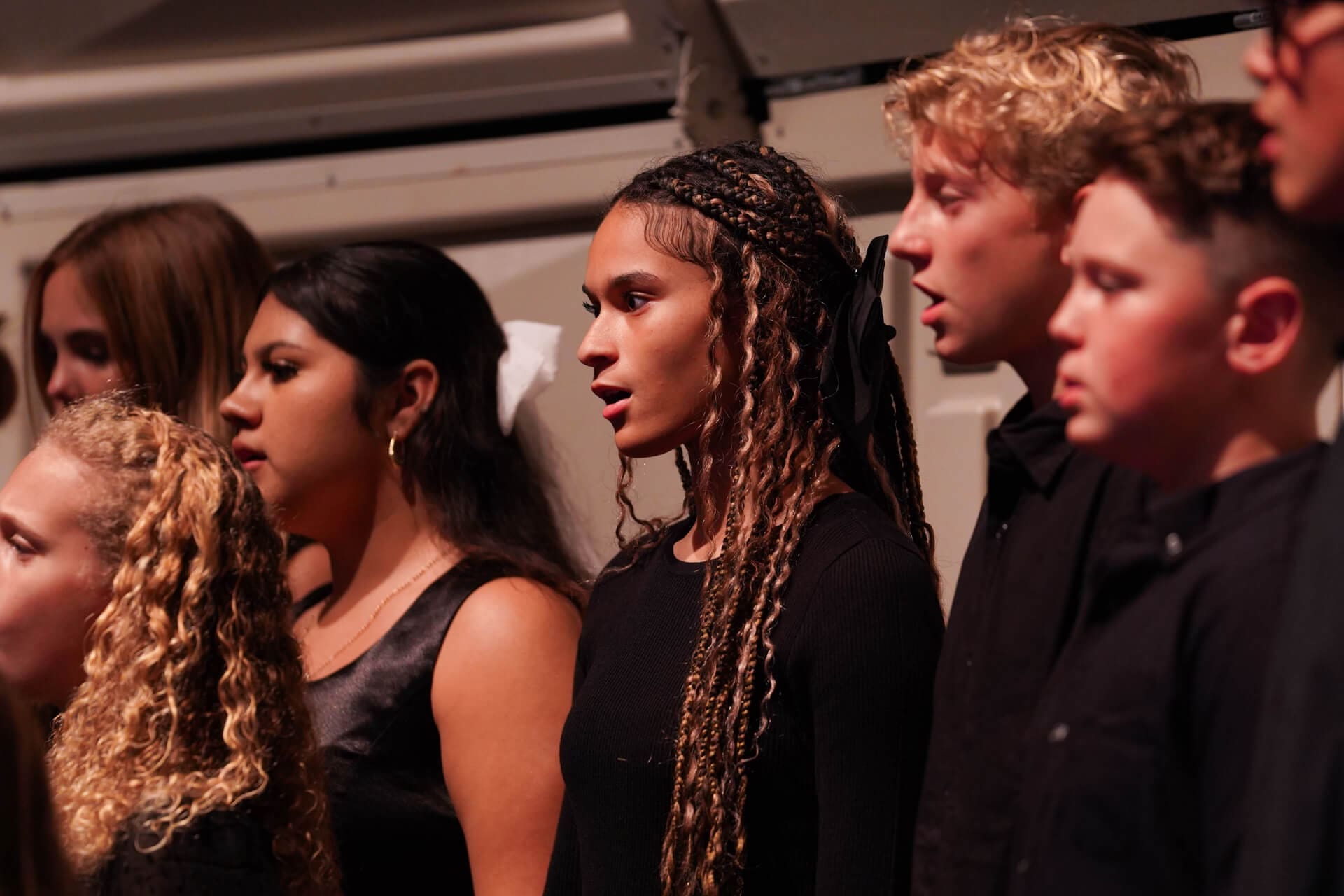
The Grades 7 & 8 chorus is an advanced singing opportunity for those interested in participating in the Upper School Chorus. The focus, however, is on the adolescent changing voice, and how to manage vocal technique during this period of physical change. Students will learn concepts such as: advanced choral warm ups, breath control, score analysis, two- and three-part harmony, and diction. Students will explore vocal literature from various genres, including folk, classical, early music, world music, and gospel. Literature will be specially selected to accommodate the needs of the adolescent voice. As leaders on the Belfield Campus, students at this level will perform actively through opportunities in both Lower and Middle School Chapels, Lessons and Carols, and evening performances.
Music in the Upper School
Students in Grades 9 – 12 have the ability to specialize in learning the advanced techniques of choir or orchestra, and expand their knowledge of music as a whole through one of our music theory courses.
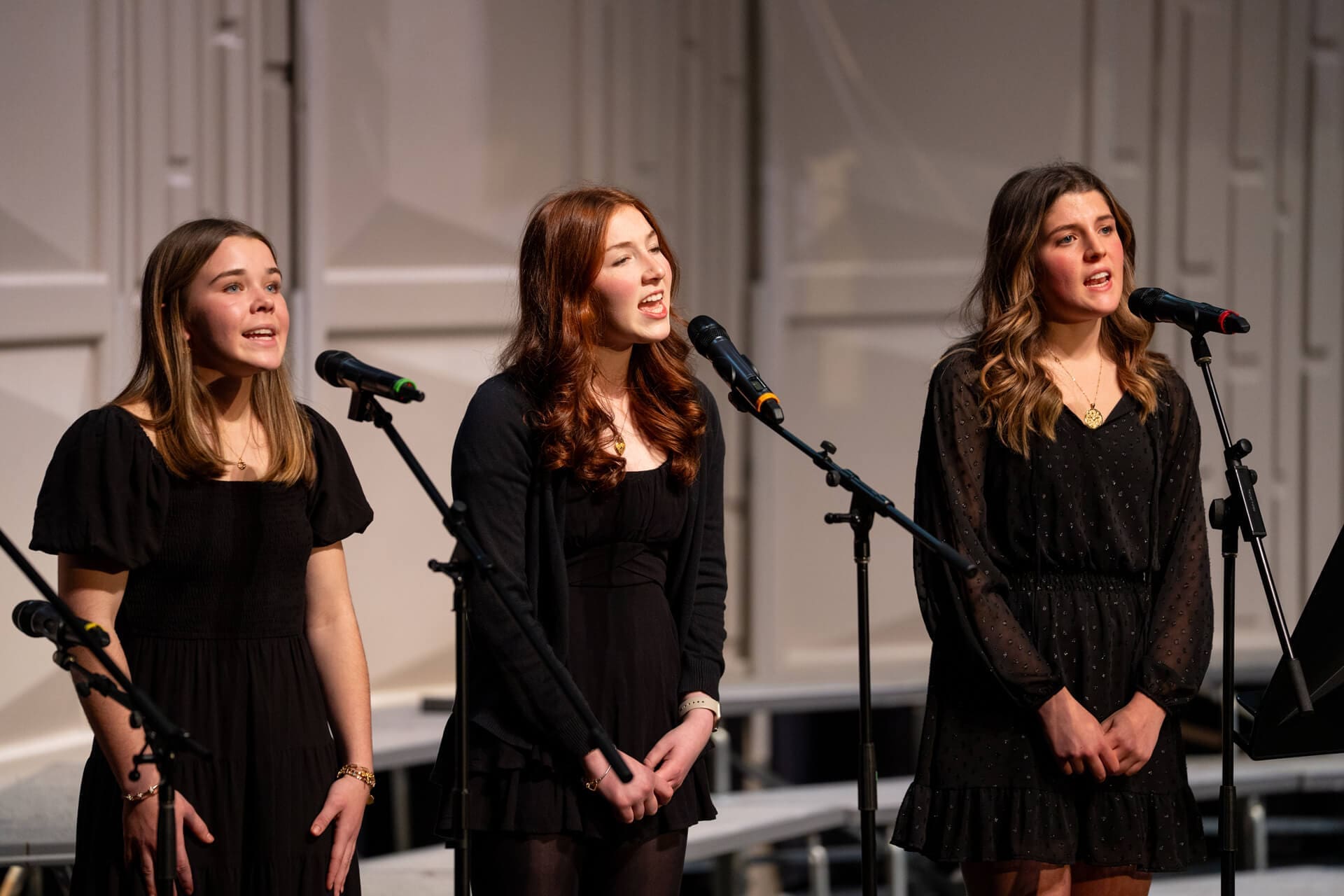
Choir
Concert Choir
Concert Choir is a non-auditioned, mixed ensemble open to students in Grades 9 – 12. Concert Choir studies and performs choral literature from a variety of time periods and musical genres. Each student also works to develop their vocal technique and sight singing skills, as well as an understanding of music theory and terminology. Students are required to sing at school-sponsored events, including but not limited to: two concerts, Lessons and Carols, and Chapel.
Saints Chorale
Saints Chorale is a mixed ensemble open to students in Grades 10 – 12. Auditions occur in the spring of the preceding school year before enrollment in the course. Students study and perform high-level choral literature from a variety of time periods and musical genres. Members of Saints Chorale master a variety of skills including sight singing, tonal memory, composition and solo performance. Students are required to sing in multiple performances, including but not limited to: two school concerts, Convocation, Lessons and Carols, Chapel, and events in the Charlottesville community.
Orchestra
Philharmonic Strings
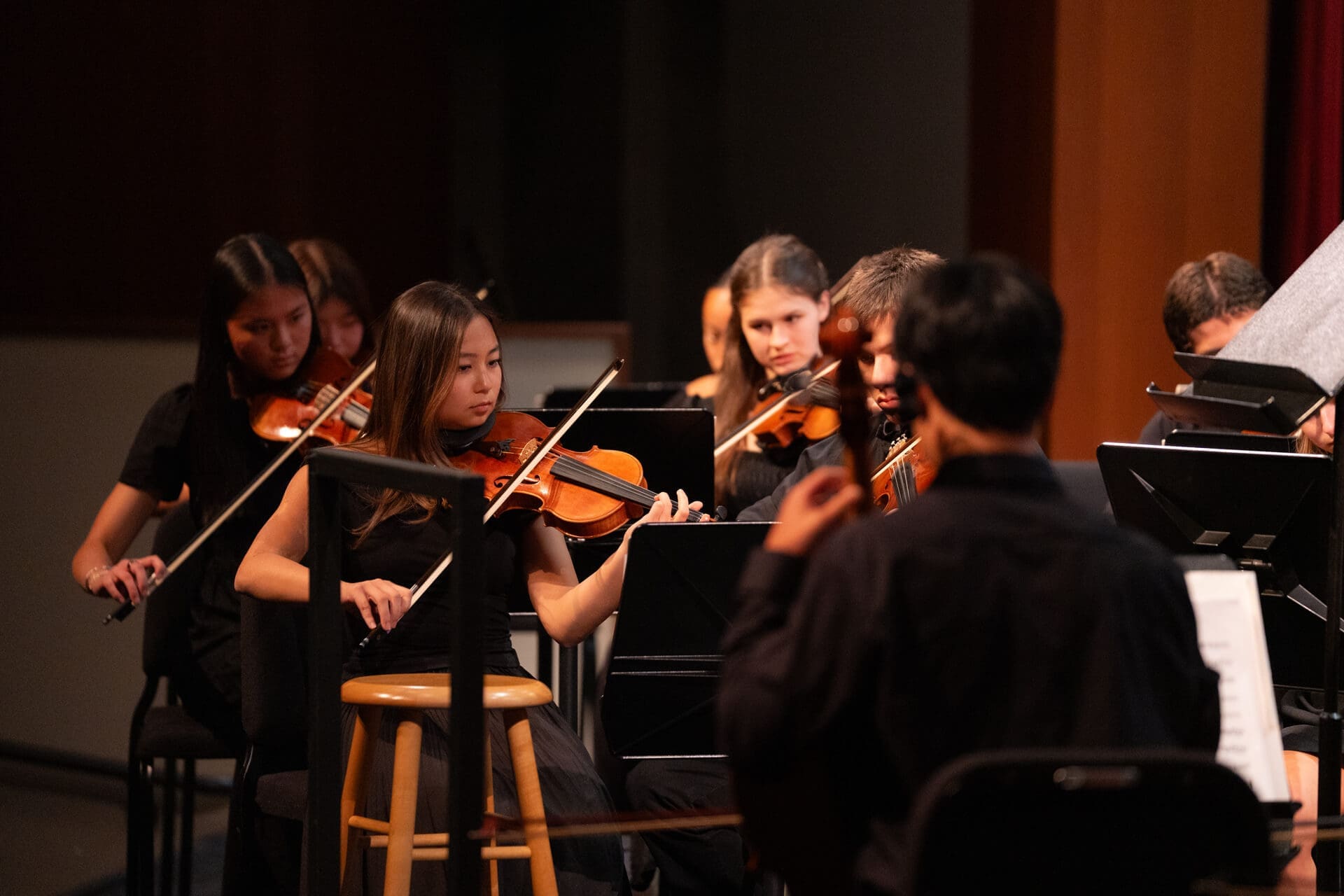
The Philharmonic Strings study and perform a variety of repertoire including baroque, classical, romantic, contemporary classical, folk, jazz, and music of the stage and screen. Students advance their technical facility and ensemble skills through in-depth study of scales, tone production, and stylistic performance practices. The Philharmonic Strings perform an average of four concerts during the year, and compete in local competitions and festivals. In addition to rehearsing ensemble pieces, there is ample opportunity for students to study solo and chamber music under the direction of the orchestra conductor and visiting faculty.
Counterpoints
Counterpoints is a course for advanced level string players. The ensemble studies and performs standard string orchestra repertoire and progressive jazz music. All members play as part of the Philharmonic Strings and are also required to work on solo and small group pieces. Counterpoints musicians perform and travel often throughout the year, representing the School at local, state, and regional music festivals and competitions.
Intro to Strings
This course, offered only in Mod 1, is intended for beginning level students who wish to devote time to building foundational skills in violin, viola or cello. Students will improve left and right hand technique and optimize tone production through their work on exercises, songs, and independent study. Students who complete this course are not required to but may develop skills that prepare them to advance to the Orchestra class being offered in Mods 2, 4, and 6.
Music Theory
Music Theory
The Music Theory curriculum will generate a cross-disciplinary field of study that connects music to the rest of the world. The focus of this course will be in-depth musical analysis. Instruction will also include an exploration of aural analysis and music history. The music studied in this course will come from all major practice periods, as well as from non-western traditions around the world. Project-based learning will be a major focus in this course. Students will compose their own pieces, design listening examples, write papers, and prepare presentations. All of these assignments will have collaborative elements within their processes. Students will also have the opportunity to teach what they learn to the class on a regular basis.
AP Music Theory
This course presents materials for study from a first-year college music theory curriculum. Preceded by a preliminary review of fundamental music theory, we approach the mastery of advanced music theory through the study of chord construction, chord successions, harmonic analysis, and part-writing. The course also focuses on the study of melody, including melodic construction (form) and the characteristic elements of successful melodic writing. The development of aural skills through interval and chord recognition, and melodic and harmonic dictation are also major aspects of the course. Project-based learning will be a major focus in this course. Students will compose their own pieces, design listening examples, write papers, and prepare presentations. All of these assignments will have collaborative elements within their processes. Students will also have the opportunity to teach what they learn to the class on a regular basis. This course will prepare students to take the AP Music Theory exam.
Continuing Studies in Music Theory
This course will encompass a cross-disciplinary field of study of music and music theory. Students in Continuing Studies will explore how music affects emotion and perception. They will also engage in reflective processes to practice artistic critique and the implementation of direct feedback into their performances. The curriculum focuses both on composition and in-depth musical analysis. Materials will draw from all major European practice periods, as well as from non-western musical traditions around the world. Students have the option of meeting more advanced benchmarks on each major course assignment to pursue a deeper understanding of music theory. Those who achieve the established criteria for AP-level work throughout the year will be eligible to earn AP credit whether they sit for the AP exam or not. All students have the option to take the AP Music Theory exam in May.
Did you know…
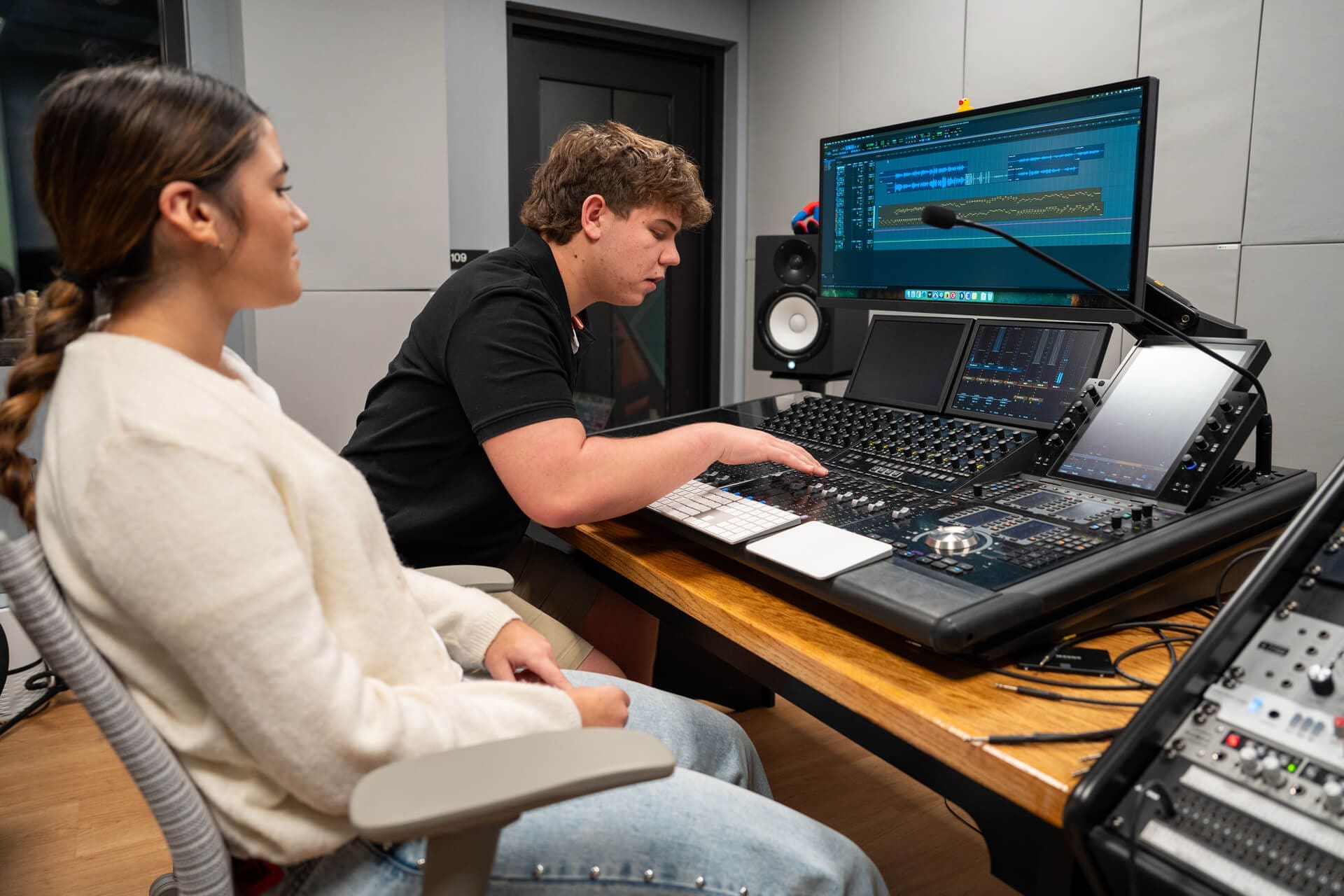
Our Upper School has a recording studio! Students in Grades 9 – 12 are able to take classes in audio engineering and learn the techniques used in recording, mixing, and producing audio content.
Students get hands-on experience with studio equipment, learn about signal flow and audio processing, and explore the various applications of audio engineering in music, film, television, and other industries.