Lower School
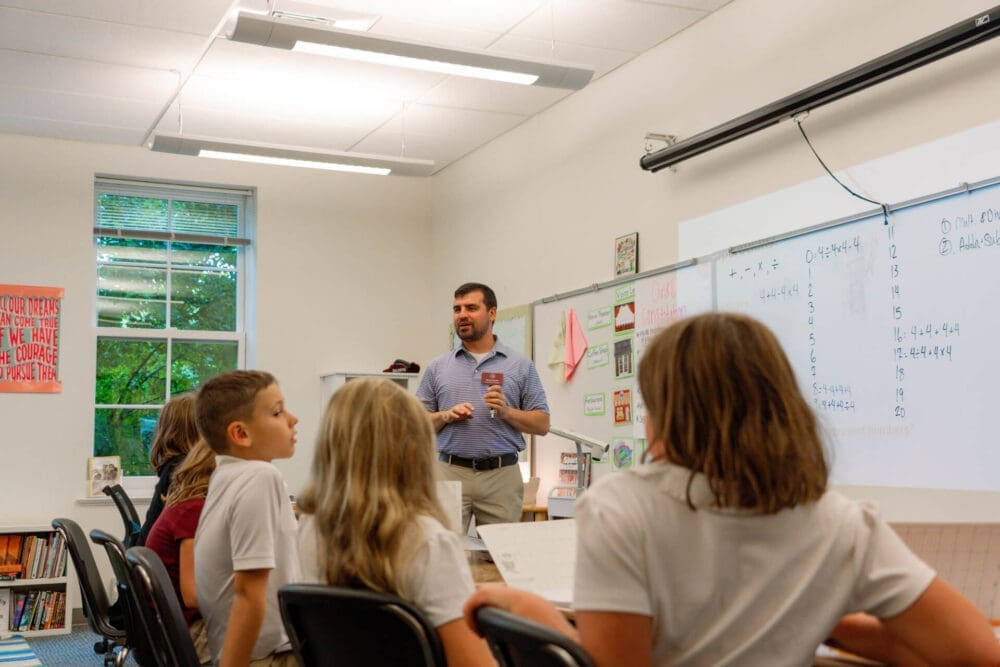
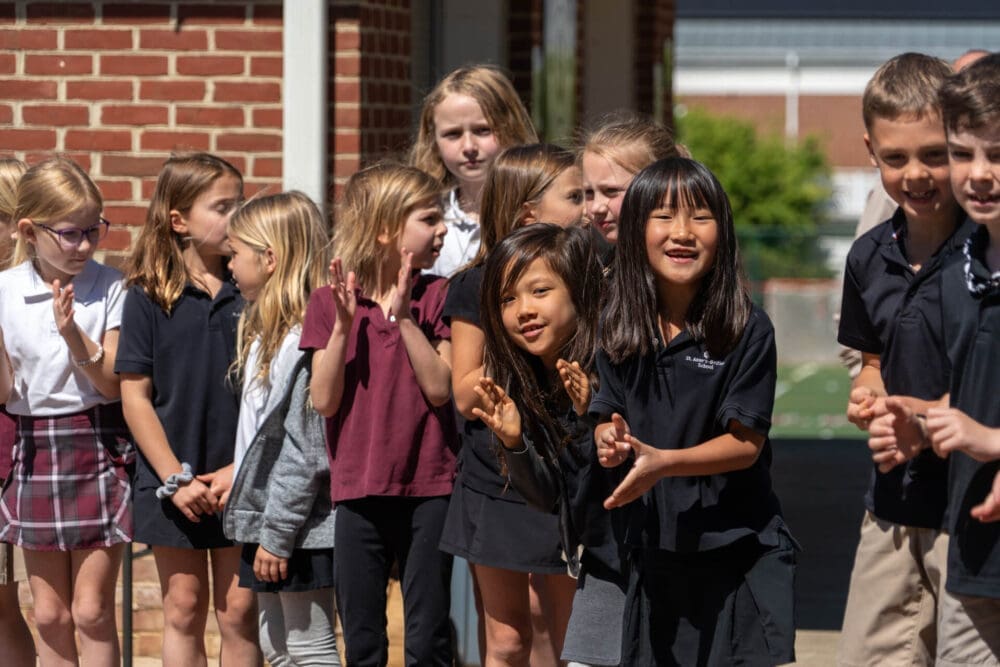
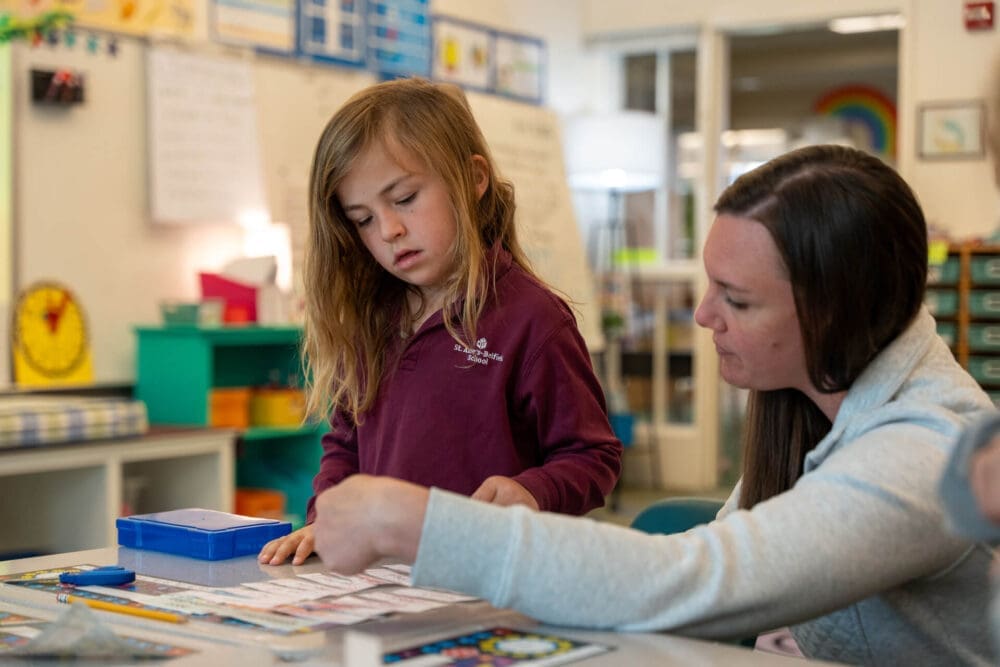
Our Lower School (K – Grade 4) encourages students to explore and question their world. It challenges students academically, empowers curiosity, and nurtures students’ social growth. In addition to core subjects, such as math and reading, students also study Spanish, visual and performing arts, library and media studies, computer science, and physical education.
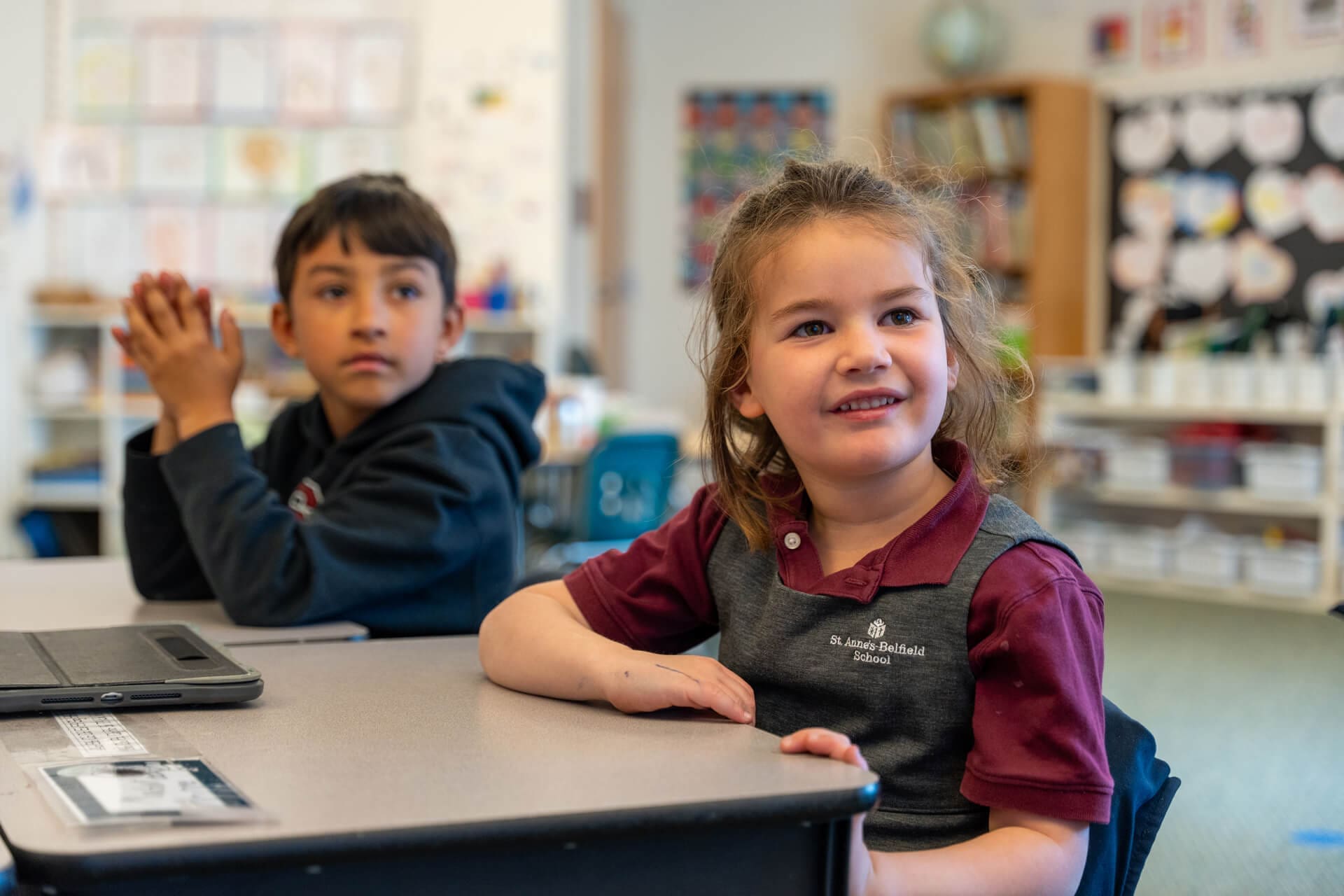
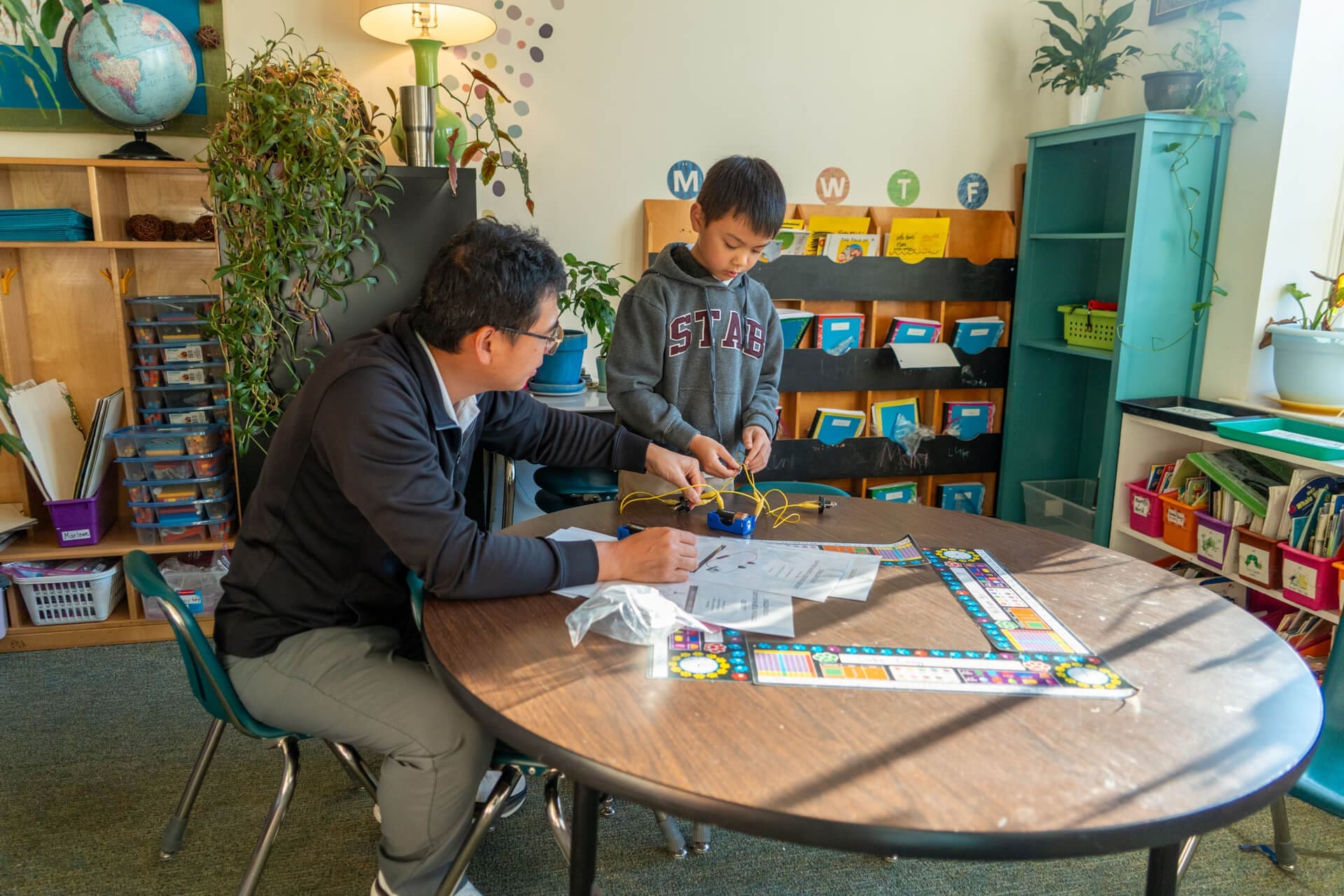
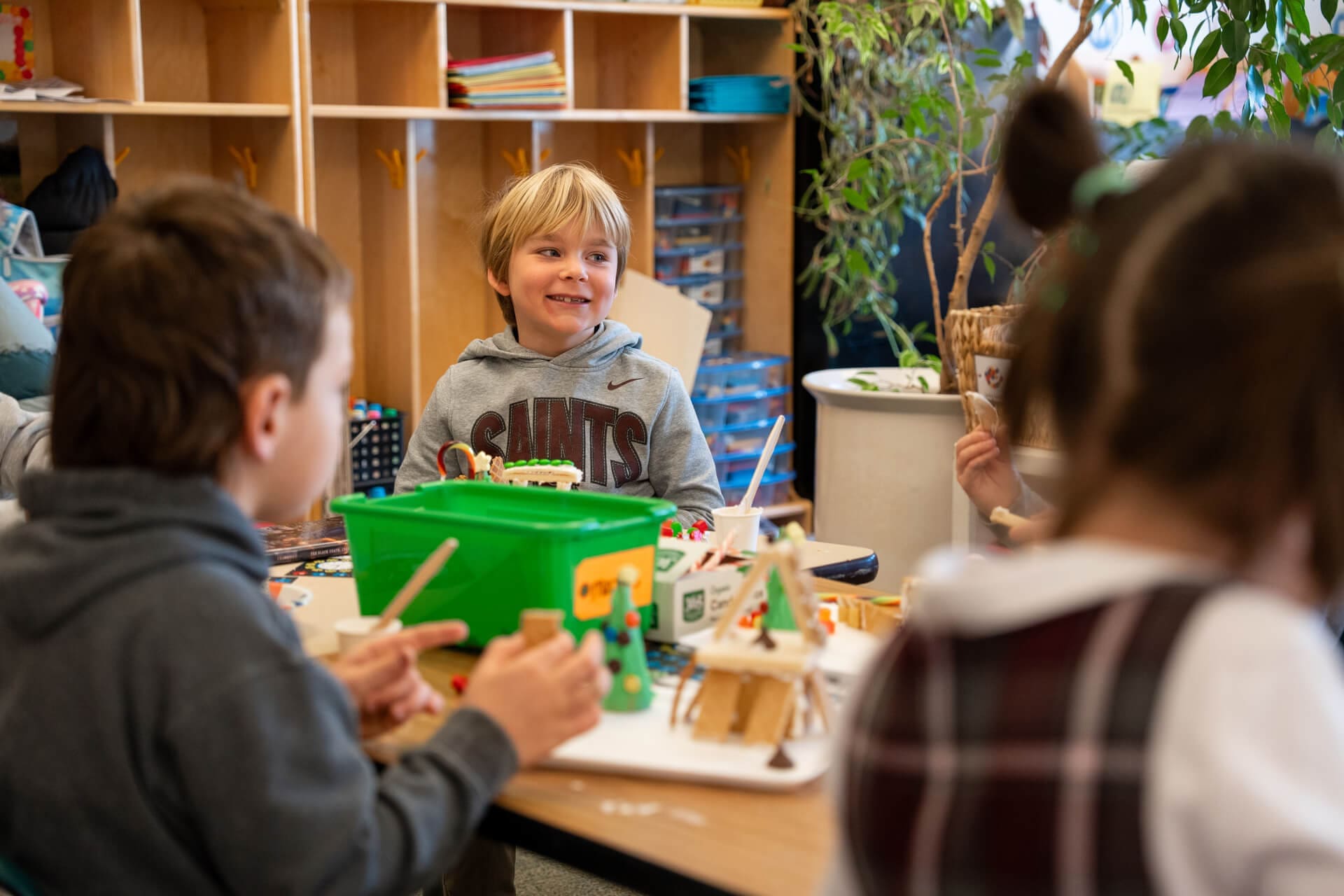
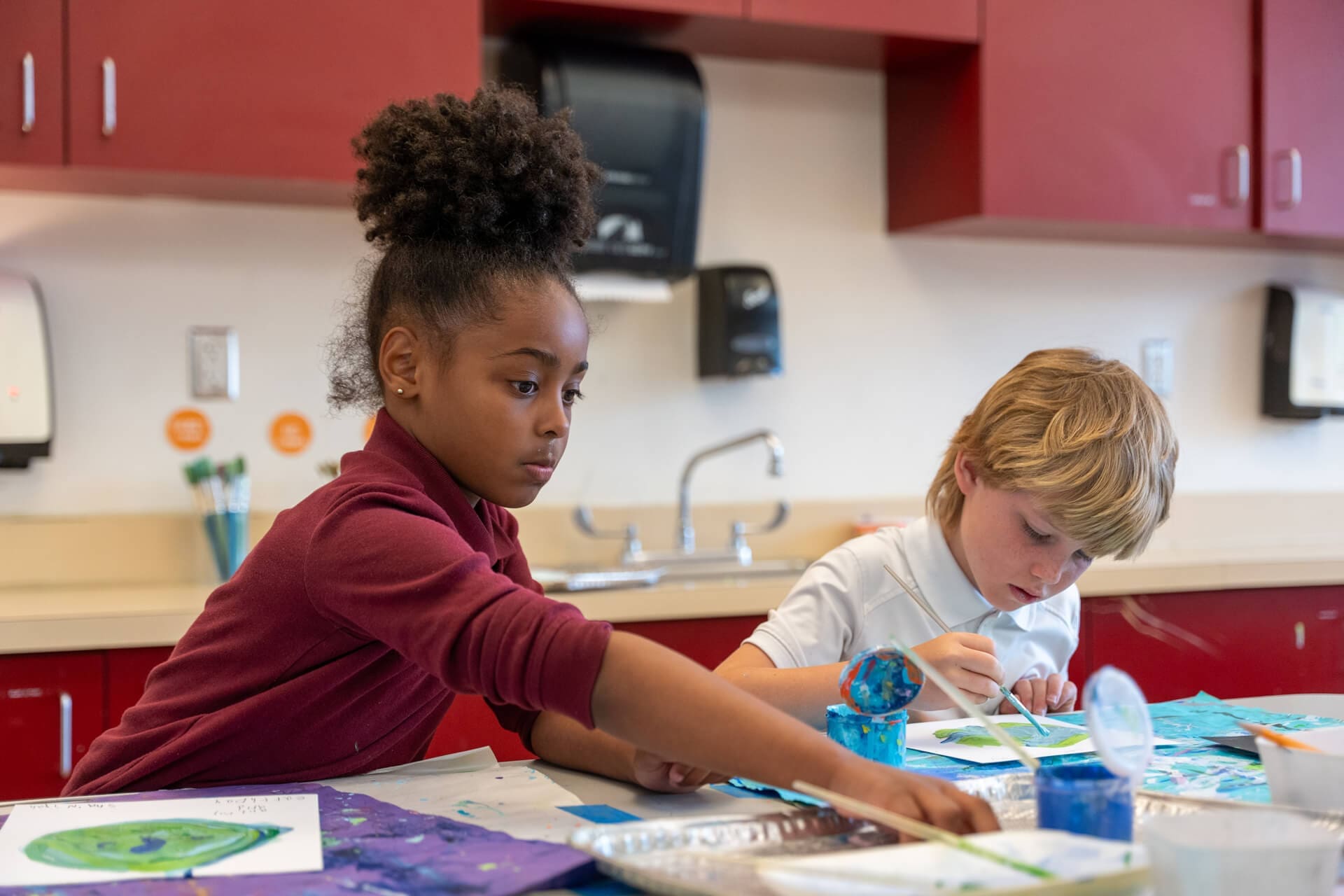
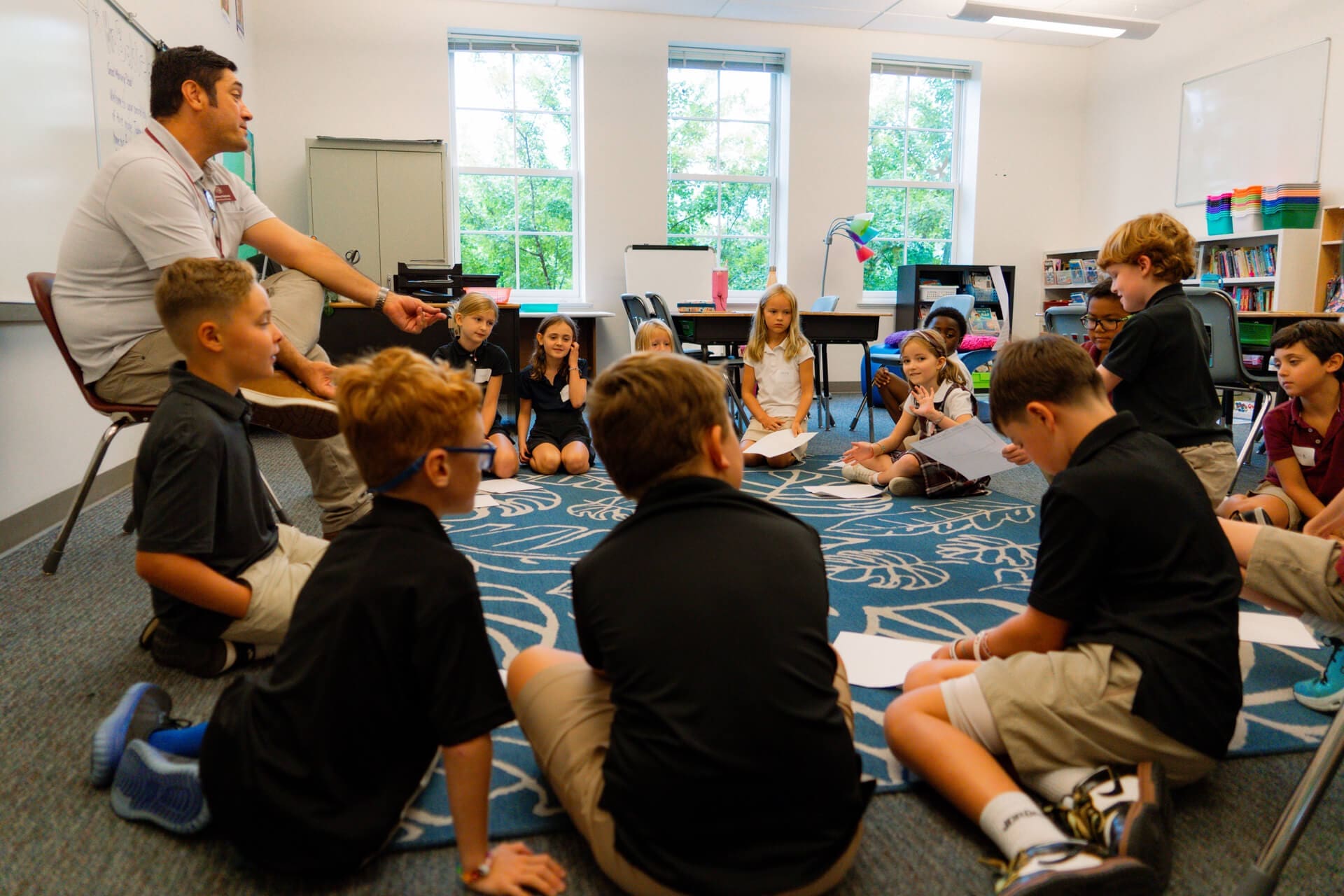
St. Anne’s commitment to inclusive excellence, its extraordinary resources, and the balance of warmth and rigor makes this an especially compelling environment for young students.Julie Brooks Head of the Lower School
Lower School Highlights
Co-Curricular Learning
Students receive a full complement of co-curricular classes and learning in K – 4 including Spanish, science (which includes forest days in K – Grade 3), Music & Movement featuring the Orff Schulwerk program, visual arts, and weekly time in the library. Additionally, K – 4 students get daily PE, and after school enrichment is offered through Saints After School (SAS) Class.
Computer Science
Computer Science (CS) goes beyond teaching students how to use computers. It helps them understand why computers work and how to create the programs and systems behind them. This deeper learning gives students the tools to use Lower School Curriculum Guide technology confidently and thoughtfully, with an understanding of their rights, responsibilities, and how technology applies to the world around them. Students develop valuable skills like problem-solving, logical thinking, and creative design that support learning in all areas of school and life.
FABLab (Grades 3 & 4)
FAB Lab is an exciting program for Grades 3 & 4 students in the Lower School, providing a structured opportunity for self-directed inquiry work. Inspired by Google’s 20% time, it is tailored to nurture the natural curiosity of young learners.
During weekly FAB Lab time, teachers supplement the academic curriculum to instruct and support students in developing the habits and skills of self-initiated learning. This encourages students to explore their own interests, to generate effective questions, to solve problems, to design projects, and to collaborate with others.
While engaging in FAB Lab work, students develop research skills to gather information and increase their digital literacy. Starting with whole-class investigations, students progress to small group work and independent projects over the course of the school year. They practice essential skills of planning, writing, revising, and presenting, while receiving feedback throughout the process from both teachers and peers to guide their iterations.
An integral part of FAB Lab research is for students to share their findings and projects with others. This occurs both with on-campus audiences through presentations, performances, and through digital platforms. FAB Lab empowers students to become lifelong learners: to ask questions, to seek answers, and to follow their passions and interests.
Health & Wellness
We are dedicated to cultivating physical health, mental well-being, and social-emotional learning among students of every age.
In the Lower School, we scaffold the wellness foundation of the mind, body, heart, and soul. You may learn more about our student programming on our Health & Wellness page.
All students are guided to achieve health and physical literacy and become self-directed critical thinkers who make decisions to live a healthy, active lifestyle.
We model and instill compassion for ourselves and others and a commitment to a kind and inclusive community.
Every day in the Lower School, students:
- build their skills by engaging in cooperative learning,
- gain an understanding of emotions,
- develop the language and skills that allow them to advocate for themselves and others, and
- create a mindful, age-appropriate social-emotional toolkit.
Integrated Studies
At the heart of the K – 4 Integrated Studies curriculum is the inquiry process. Students begin each unit with an inquiry question that sets the stage for new learning. Students then spend time in sustained investigations that build their content knowledge. Each unit culminates with an action project, where students apply their new knowledge to a project that will have an impact on their community.
Library and Media
We want our students to become lifelong readers. We want them to love books, appreciate literature, and become active in the global conversation about books and authors. Following these goals, the Legner Learning Village Library, with a collection of over 15,000 volumes, is available for our students and families to enjoy. Students visit the library each week to learn library skills, select and check out books, research, and spend time reading for pleasure.
The Legner Learning Village Library curriculum blends literature appreciation and reading guidance. Students will be exposed to an array of contemporary authors and illustrators, as well as those classic creators of children’s literature. Students will discover more about the authors they enjoy, are encouraged to read across genres in both fiction and nonfiction, and to read books by authors of different cultures.
Partnering With Families
Building strong parent partnerships and connections to each family is important to us. We prioritize the partnership with families, beginning each year with conferences before the first day of school.
Our offerings include parenting workshops, Parents’ Association events, and on-going educational opportunities for our families including Wellness Wednesdays.
Illustrative Mathematics: IM 360
Lower School students learn mathematics through Kendall Hunt’s “Illustrative Mathematics: IM 360” curriculum. Illustrative Mathematics is a problem-based program that encourages students to draw on their existing understanding, lived experiences, and the world around them as resources for problem solving. Lessons are designed to engage students in actively “doing mathematics.” They develop concepts and procedures while participating in key mathematical practices, including making sense of problems, reasoning abstractly and quantitatively, constructing arguments and critiquing the reasoning of others, modeling with mathematics, using appropriate tools strategically, attending to precision, recognizing structure, and expressing regularity in repeated reasoning. As students strengthen these skills, they become increasingly able to apply their understanding flexibly in new and unfamiliar situations.
Social Emotional Learning Toolkit (Kindergarten & Grade 1)
Kindergarten and Grade 1 integrates a Social-Emotional Learning (SEL) toolkit into all parts of the curriculum. Developed by one of our teachers, Lindsay Rubin, M.T., recipient of the VAIS Innovation in Education Award, the toolkit teaches young learners and citizens skills, strategies, and language to navigate their emotions and relationships. Tools include the perspective tool, and the calm down tool, the think it through tool, use your words tool, check-in tool, impact tool, focus tool, make a plan tool, let it go tool, bounce back tool and others.
At a Glance
- 9:1Student-Teacher Ratio
- 13 – 17 Average Class Size
- 79%Teachers Have Advanced Degrees
Sample Schedule
| Morning Care | 7:30 – 8:00 a.m. |
| Morning Meeting | 8:00 – 8:45 a.m. |
| Reading & Language Arts | 8:45 – 10:00 a.m. |
| Snack & Recess | 10:00 – 10:30 a.m. |
| Social Studies | 10:30 – 11:15 a.m. |
| Art/Spanish/Science/Library | 11:15 a.m. – 12:00 p.m. |
| Lunch & Recess | 12:00 – 12:30 p.m. |
| Math | 12:30 – 1:45 p.m. |
| Physical Education | 1:45 – 2:30 p.m. |
| Writing Workshop | 2:30 – 3:15 p.m. |
| Dismissal or Saints After School (SAS) | 3:15 – 5:30 p.m. |
*This is a sample schedule. Times and order are subject to change as not all grades follow the same schedule.