Safety & Security
The well-being of our students is our highest priority. Through proactive protocols, regular assessments, community-wide commitment, and strong partnerships with local first responders, we continually work to ensure every student feels cared for and protected so that they may best learn, grow, and thrive.
The information below outlines the systems in place to safeguard our campus and the ways families can partner with the School to maintain a safe and welcoming environment.
Contact Security
To report suspicious behavior or activity, don’t hesitate to call on-duty security at 434-227-5303. You may also contact Security Manager Todd Koogler at tkoogler@stab.org.
Emergency Response and Communication
Who is on the Security Team? (View Bios)
Who is on the Emergency Management Team?
The School’s Emergency Management Team include the members of the Senior Administrative Leadership Team (SALT), Director of IT Mark Adair, Director of Residential Life Hattie Francis, and key members of our operations and facilities departments, including our Security Team. Meet the members below.
Meet the Security Team

W. Todd Koogler, Security Manager
Todd Koogler brings more than 35 years of public safety experience to the St. Anne’s-Belfield security team. As security manager, he is a key figure in assisting the head of school in executing the emergency management plan, coordinating emergency responders, serving as liaison with first responders to relay accurate and timely information, and responding to emergencies. Reporting to our director of facilities, he is also responsible for assessing our campuses for security concerns and annual security training for our faculty and staff.
Mr. Koogler has a storied safety and security background that spans emergency management, fire and EMS command, and tactical police response. Most recently, he served as the emergency manager and coordinator of safety & security for Charlottesville City Schools.
Mr. Koogler’s career includes 27 years as a lieutenant/paramedic with Chesterfield County Fire & EMS, during which he also served as a SWAT team member for both the Chesterfield County Police and the Virginia State Police 1st Division. His extensive operational background includes serving as deputy chair of the Chesterfield County Terrorism Response Work Group, working as the hazardous materials team training officer and team leader, and serving on the Central Virginia All-Hazards Incident Management Team. Notably, Todd was selected for the Incident Management Team for St. Bernard’s Parish in the wake of Hurricane Katrina and served as an EMS expert for the 2009 Presidential Inauguration. He holds a B.B.A. in Business Administration.

Peter Cormons, Director of Facilities
Pete Cormons has a bachelor’s degree from the University of Virginia and 15+ years of experience in facilities and operations management, including seven years in an independent school. His varied and storied background includes seven years as the captain of a 600 passenger cruise ship, Virginia Department of Criminal Justice Threat Assessment Certification, Advanced Marine Firefighting Certification, and overseeing security operations for passenger vessels and maritime facilities. During an incident, our director of facilities assists the head of school in executing the School’s emergency management plan and coordinates local emergency response to ensure they are dispatched to the correct locations. He also dispatches facilities crew members depending on the severity of the event.
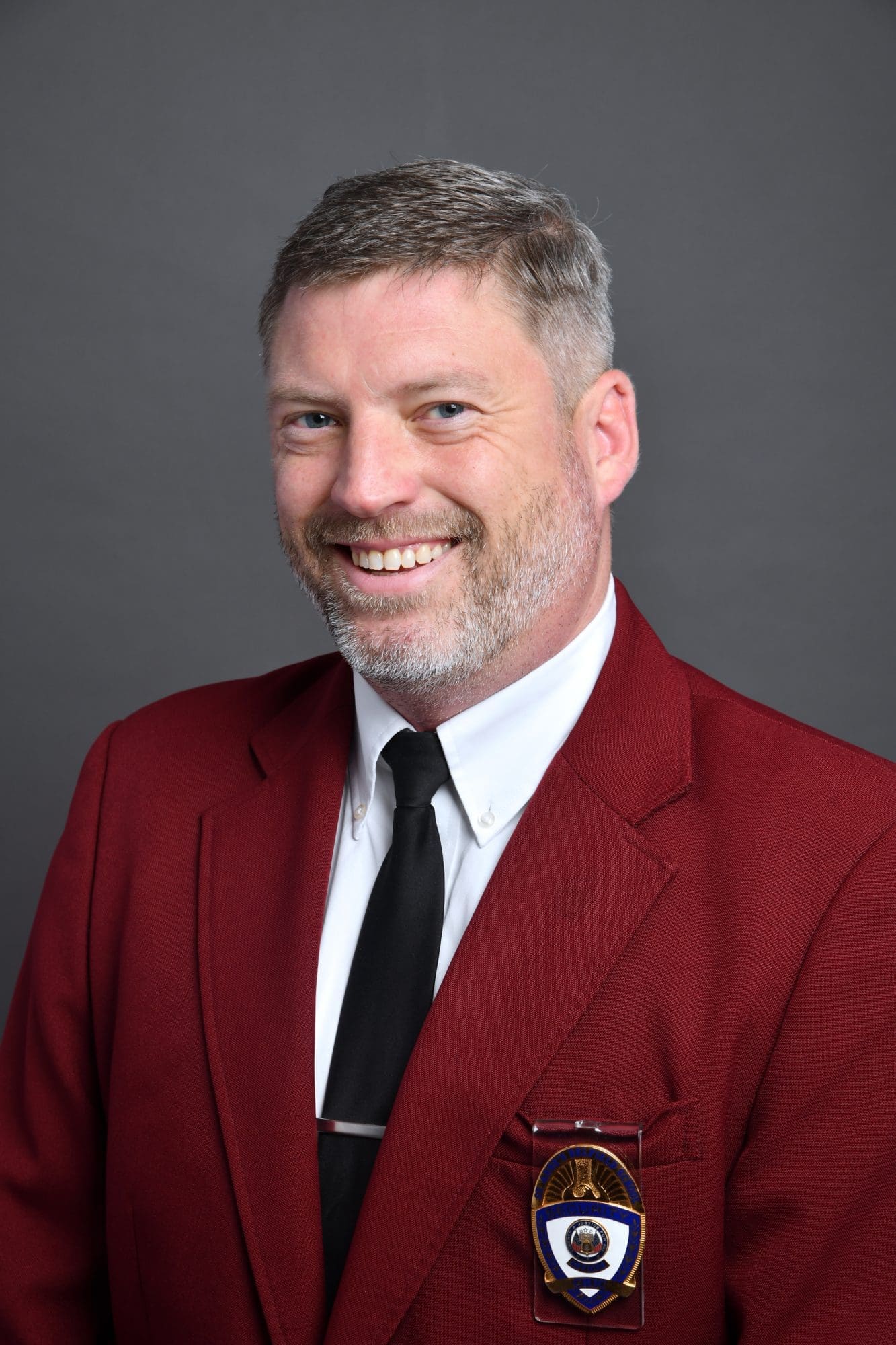
Andrew Chic, Security Officer
Andy Chic joins the School with diverse experience gained from the Army, Army National Guard, as a park ranger with the Indiana Department of Natural Resources, various aviation services organizations, and certified security positions, including in campus security environments. Mr. Chic is dedicated to maintaining the safety and security of staff and students. Among the first to arrive on campus each day for arrival, Mr. Chic is a trusted presence, directing visitors, patrolling the campuses, and acting to implement the school security plans as necessary.
How does the School respond in the event of an emergency?
How does the School respond in the event of an emergency?
How We Respond to Emergency Situations
During an emergency situation, such as a tornado warning other weather event, fire, potential threat, or other active event, our top priority will always be to see to the safety and security of our students, employees, and visitors first. This involves:
- Alerting the adults and seeing to the safety of the children and adults. This may include evacuating the building(s), sheltering in place, or locking down one or both campuses, depending on the circumstances. See the Definitions section below.
- Neutralize the threat or concern. In case of a weather event, the School relies on a combination of the Perry Weather System and National Weather Service for iinformation.
- Convey next action steps to the people on the campus of concern.
During an incident, we ask that you do not come to campus if not already at school or call the school and to instead wait for instructions. We thank you for your patience and understanding as responding to the threat must remain our top priority prior to sending additional broad communications. Doing so takes resources away from the top priority of neutralizing the threat.
What You Can Expect by Way of Communication
Once those top three priorities are well underway, we will communicate more broadly to parents/guardians. At a minimum, those communications will include:
- The fact that there is an active incident, and on which campus.
Depending on the circumstances, it is possible that if the lockdown only involves one campus, only parents/guardians with students on that campus will receive this notification. An all-school communication will be sent once the incident is over (see below). - Any information that we are able to safely share and can reasonably verify as true.
During an active event, information comes in fast, from a multitude of sources, and is often disjointed or conflicting. It can take time to construct a true picture of what is actually happening. What’s more, there may be details that can not be broadcast without compromising the emergency response. What verified details we can provide, we will. - A time estimate of when you can expect another update.
- An all-school communication will follow after the event with a more cohesive description of events. This may take up to 48 – 72 hours after the conclusion of the incident.
Note, if you are a parent, guardian, or employee of the school and have previously unsubscribed from Ruvna alerts, you will not receive notifications. You may still stay updated via this webpage or the school’s official social media channels.
How does St. Anne’s-Belfield communicate during an emergency?
How does St. Anne’s-Belfield communicate during an emergency?
Multiple redundant systems, including intercom, building alarms, and Ruvna alerts, allow us to quickly notify faculty and staff with immediate instructions. Once students and employees are safe and accounted for, a Ruvna message is sent to families via text, phone, and email. Regular updates follow as the situation allows, and reunification procedures are in place to ensure students are released safely to families.
How does the School define different emergencies?
How does the School define different emergencies?
Shelter in Place
What is the shelter in place action?
A shelter in place action is called when there is an outside condition in the area that is not currently a direct threat, but requires people to stay safely indoors. Shelter in place uses the security of the physical facility to act as protection. During this time, all students and employees are brought indoors and all exterior doors remain locked. There are no class transitions between buildings.
Lockdown
What is the lockdown action?
Lockdown is called when there is a threat or hazard on School grounds. The lockdown action demands locking interior doors, barricading them if possible. Occupants are instructed to move out of the line of sight of corridor windows or open fields, turning off lights to make the room seem unoccupied, and having occupants maintain calm and quiet — including silencing devices that may make noise. As they are safely able to do so, adults use Ruvna, our School emergency notification software, to mark students and employees safe or in need of assistance, and to receive further instructions from our emergency management team.
Evacuate
What is the evacuate action?
Evacuate is called when there is a need to move people from one location to another, such as a fire drill or gas leak. During an evacuation, students and employees are asked to move from one location to another in an orderly fashion. As they are safely able to do so, adults use Ruvna, our School emergency notification software, to mark students and employees safe or in need of assistance, and to receive further instructions from our emergency management team.
Campus Access and Visitor Management
What measures are in place to prevent unauthorized entry?
What measures are in place to prevent unauthorized entry?
Although our entire security protocol can’t be shared for safety reasons, here are some of the protocols in place: exterior doors remain locked during the school day; security cameras cover all main entrances, parking lots, and high-traffic areas; security staff patrol throughout the day and evening to monitor activity; faculty and staff are trained to approach and redirect anyone who does not wear a visitor badge or is not recognized as a parent/guardian.
How does St. Anne’s-Belfield control access to campus?
How does St. Anne’s-Belfield control access to campus?
Main entry points are monitored by faculty, staff, and security staff both in person and through indoor and outdoor cameras. All outside visitors check in through a front office, where their identification is scanned through the Ruvna visitor management system. Once verified, visitors are issued a badge that must be worn while on campus.
Parents and guardians are familiar to our community through school records and regular engagement. We regularly review visitor protocols to balance accessibility with safety.
How are large gatherings (e.g. Chapel, Convocation, athletic events) secured?
How are large gatherings (e.g. Chapel, Convocation, athletic events) secured?
During large events, security staff monitor entrances, exits, and crowd activity. Internal protocals guide their response to any concern. Families attending events are asked to follow standard dismissal and pickup procedures to ensure student safety and accountability.
How are outdoor learning spaces, playgrounds, and athletic fields secured?
How are outdoor learning spaces, playgrounds, and athletic fields secured?
The Early Childhood Program natural classrooms, Lower School playgrounds, parking areas, and athletic fields are patrolled regularly by security, faculty, and staff. Outdoor spaces are actively supervised and patrolled, and regularly evaluated to strengthen safety measures.
Policies and Procedures
What safety training do staff and students receive?
What safety training do staff and students receive?
Faculty and staff complete annual training in emergency response, visitor management, and threat awareness. Students participate in age-appropriate safety drills (fire, lockdown, tornado/shelter-in-place) throughout the year, guided by trusted teachers who prepare them calmly and appropriately.
Families are provided advanced notice of lockdown and shelter-in-place drills. We appreciate your partnership in preparing children for these events. We welcome communication if you anticipate your student may need additional support from counselors or faculty.
How does the school address reports of concerning behavior?
How does the School address reports of concerning behavior?
The School has a formal threat-assessment procedure that we activate whenever concerning or suspicious behavior is reported. A trained threat-assessment team reviews and responds to reports of concerning behavior.
What is St. Anne’s-Belfield firearms and weapons policy?
What is St. Anne’s-Belfield firearms and weapons policy?
The School follows Virginia law regarding firearms and weapons on school property. Any sighting or suspicion of a weapon should be reported immediately to security at 434-296-5106. If appropriate, law enforcement will be contacted. We encourage all members of our community to remember: If you see something, say something.
What about medical emergencies?
What about medical emergencies?
The School has nurses and athletic trainers on staff during the school day and athletics, respectively, with emergency equipment positioned across campus. All faculty and student-facing staff are trained in CPR and first aid. Medical emergencies are handled promptly with coordination between school health staff and local emergency responders. Parents/guardians assist by completing their students’ medical records and emergency contacts each year, and alerting the School if there are changes mid-year.
Does the School address digital safety and cybersecurity?
Does the School address digital safety and cybersecurity?
Yes, the School also prioritizes digital safety, training students in digital citizenship and monitoring systems to protect information.
Family Partnership
How can families support the School’s safety efforts?
How can families support the School’s safety efforts?
Campus safety is a shared responsibility. Families can help by keeping their records updated with the School, following emergency instructions, promptly reporting concerns, and reinforcing with students the importance of cooperating during drills and emergencies. Together, we ensure our community remains safe and supported.
If You See Something, Say Something
- To report suspicious behavior or activity, don’t hesitate to call on-duty security at 434-227-5303. You may also contact Security Manager Todd Koogler at tkoogler@stab.org.
Ensure Your Contact Information Is Correct
- Please ensure your contact information is correct in your Veracross Portal. This information syncs to Ruvna, the school’s emergency communication software we use to contact you for school closings and other important notifications.
- Please find Ruvna information for parents/guardians here, including how to opt back in if you have previously opted out of notifications.
Wait for Information and Instructions from Official Channels
- As difficult as it is, please wait for information and instructions to come through official channels.
- Please don’t call the School (either campus). These important channels need to remain clear and will only be answered for local authorities during an event.
- Please don’t come to campus unless instructed to do so.
Stay Calm and Don’t Spread Rumors
- Please stay calm and avoid spreading unverified information. Rumors travel faster than facts. It makes it much more difficult for the emergency management team to properly assess the situation and can cause unnecessary panic.
- The School uses Ruvna to be able to share information quickly and safely during an event. Ruvna allows faculty to alert the emergency management team if someone requires medical attention and provide instructions such as lockdown inside classrooms, evacuate to a nearby area, or signal that all is clear.
Share These Reminders With Your Students
- Instruct your students to also stay calm and follow teachers’ instructions.
- Please remind students not to leave their property unattended. While we are lucky to be members of a trusting and tight knit school community, we must stay vigilant. Leaving backpacks and other property outside buildings, on benches, and in hallways poses a security risk.
What resources can you share to support students?
Supporting students when the news is distressing
As your school partner dedicated to supporting whole-child development, we support students in developmentally-appropriate ways.
In the Lower School (Age 2 – Grade 4), this may mean listening and offering a chance to process only if a child brings up the event. If parents/guardians have indicated that a student may need some extra support due to individual circumstances, the homeroom teacher or school counselor will make every effort to provide extra check-ins with the student or be especially observant of the student to provide adult support as appropriate.
In Middle School (Grades 5 – 8), teachers work to meet the needs of the group and the age group. This could look like guided discussions in advisories or classes with a current event curriculum. Regardless, adults will keep a watchful eye on all students, focusing on preserving their wholeness, dignity, and belonging.
In the Upper School (Grades 9 – 12), our practice is to create support and learning spaces for students. Students can expect intentional check-ins during Advisory, acknowledgment and time for reflection during Chapel, teachers, advisors, deans, and counselors making space for questions, and optional educational forums prepared for and delivered by our faculty members with expertise in the area. As with all our divisions, adults will closely monitor those students whom we know or anticipate might be struggling. For our boarding students, this includes ongoing or emergent support with our psychologist.
Reach out if needed! We are here to care for and support your students.
If you anticipate a strong emotional reaction or receive questions from your student that you need help answering, please reach out:
- Early Childhood Program: Emily Brown (ebrown@stab.org)
- Kindergarten – Grade 3: Your student’s homeroom teacher or School Counselor Megan Haas (mhaas@stab.org
- Grades 4 – 8: Your student’s homeroom teacher/advisor or School Counselor Stephanie Ressler (sressler@stab.org)
- Grades 9 – 12: Your student’s advisor, dorm parent (boarding students), or School Counselor Sophie Speidel (sspeidel@stab.org)
Basic principles to help you speak to your children
From Jamie Howard of Child Mind Institute:
We want our children to find out about big, important news from trusted, loving adults. If your child is in Lower School or older, it means they potentially will hear about this news and that you should consider having a proactive discussion with them. Your task is to assuage any worries and correct any misinformation they may be hearing.
An opener may be, “I’m feeling really sad about a news story and I’m wondering if you may have heard about it.” Then, meet your children where they are. Answer the questions that will naturally emerge. You know your children best. It is okay to go into less detail based on their age or ability to process this type of event.
Be calm and transparent. Talk to your kids about safety measures in place at school (ex: key fob entry on all doors, background checks for all teachers and staff, security patrols led by our expert emergency management team) and actions you take in your own home to provide a safer environment. Your children will reflect what they see in you, so be moderate in your emotional intensity.
Please continue to monitor and/or limit your student’s technology use.
Be mindful of the graphic content and abundant misinformation that spreads through online channels, including social media and gaming platforms. Consider in advance what your child may be exposed to online. You may consider using a technology monitor like Bark, or limiting or discontinuing use of social media such as Snap, TikTok, X (formerly known as Twitter), and Instagram.
At school, we will continue to support your efforts by teaching students at age-appropriate levels about media literacy and critical thinking, digital citizenship and online privacy, and the role of technology and mental health.
Resources
- Talking to Children About Tragedies (healthychildren.org from the American Academy of Pediatrics)
- Talking to Children About Violence: Tips for Parents and Teachers (National Association of School Psychologists)
- Explaining the News to Our Kids (Common Sense Media)
- How to Talk to Children about Difficult News (American Psychological Association)
- Helping Children Cope with Terrorism–Tips for Families and Educators (National Association of School Psychologists)
- How to Talk to Your Child About Gun Violence and School Shootings (Verywell Family)
Thank you for your assistance in promoting a safe and secure environment for our students.